


Introduction
Categories of Postcards
Landscapes
Houses
Businesses
Churches
Civic
Uses of Postcards
Lost Beverly
Use of Colorization
Dynamics
What was Written
Beverly Post
Cards
Postcard Publishers
Modern Day >
Modern Day Postcards
by Uri Lafontant
After the "golden age" of postcards (which was anywhere between
1890-1920), postcards decreased in popularity. Postcards of today are
mainly used for collecting and as a means for comparing to the past. Most
people only get postcards as souvenirs rather than to actually send out.
Back in the day, they were a big part of communication. Since they were
cheaper to mail out than a normal letter in an envelope, people used postcards
to get their message to whomever they wanted. If you were to look for
postcards today, only in a city that had a big tourist attraction-whether
it is for historic sites or great weather-would you find a wide variety
of postcards. If you were to look for postcards of a small city like Beverly,
then you would only find two or three. In the old days, that was not the
case. When that postcard wagon started to roll, everybody jumped on. Whether
it was a city or town, small or big, it did not matter. That is a good
thing because now those postcards can be used to get an idea of the past,
especially being that some of those postcards are the only available info
on some historic sites.
In the old days, Beverly had many postcards that people could use to send
out. They had postcards of
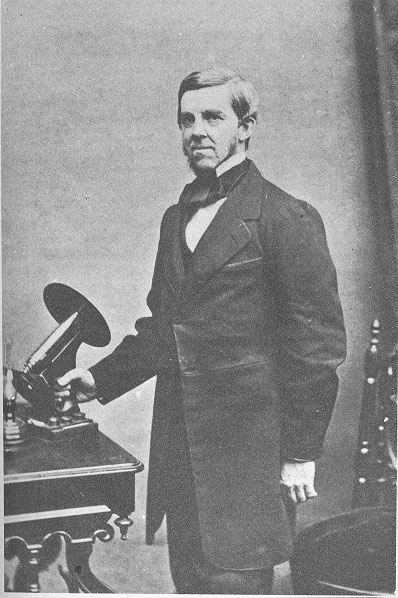
people that had significance to Beverly or that were from Beverly
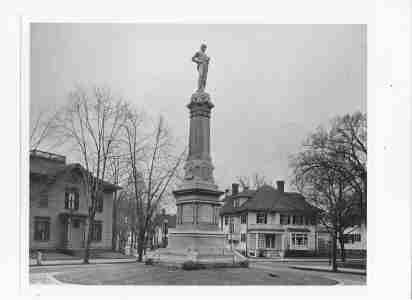
and were famous. They also had some postcards that had monuments
of some kind, which would show some of the historic sites of Beverly.
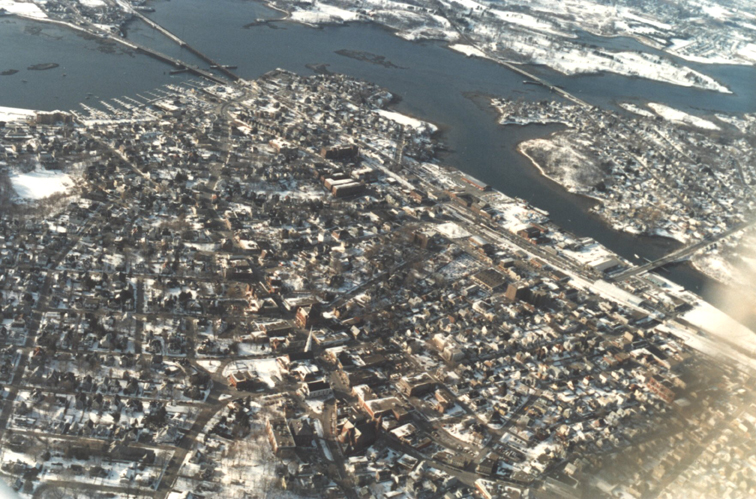
Today, there are not too many postcards of Beverly. The common one is
the one with the aerial
view . Just about every city has this basic view. This is one of the
only remaining categories from the past of Beverly postcards. In addition,
people can now create their own postcard. They can take their own picture,
and with new technology, make it into a postcard. This is very popular
today and is what most people do instead of finding a postcard for a particular
subject they are looking for.
Technology is both the friend and foe of postcards. With the rise of technology
came the rise of postcards. More factories were being built, so more people
had jobs, so more people could afford new things like the automobile and
could now travel farther. During their travels, people needed a form of
communication. This is where postcards came into play. Not only were they
cheaper to send then a normal letter, but they also had a little info
on where they were already on it so people could just write their important
messages and get right to the point. As technology continued to grow,
the postcard became less and less needed. Now when people travel, they
do not need to send out any postcards. With new technology such as phones,
cell phones, e-mail, lab tops, digital cameras, and online chatting, people
can find a better way to give somebody a message. If someone were to get
a postcard, it would more then likely be as a souvenir rather than to
send to somebody.
The messages on modern postcards are also getting a little boring. If
you were to look back at a postcard and read the back, there would be
a lot of info of what the person wanted to say. The writing was more detailed.
Today, people do not use the postcard as a means to pass important information
so they only have little, short messages on them. There is not any real
significance to them at all. People just have better ways to communicate
and do not need to rely on a postcard.
Sure, the postcard may be dying, but it is not dead. Even though there
is not a real importance on postcards, there are still a handful of people
who admire them. Whether it is for collecting or for writing messages,
the postcard seems to be on a comeback. They are already still quite popular
in cities that have a big tourist attraction, but it would be hard for
postcards to have as big an impact on a small city like Beverly as they
once did. For postcards, it is an ongoing struggle versus technology;
and since technology is only getting better, postcards will have its hands
full.
Sources:
"Beverly High Alumni," 21 October 2002, <http://www.beverlyhighalumni.com/scenes.htm>
(21 October 2002).
"Beverly Postcards." 21 October 2002, Primary Research, <http://www.primaryresearch.org/postcards/index.htm>
(21 October 2002).
Back to Table of Contents

